Shoes by the front door. A pile of hats crumpled on the top shelf. Coats falling off hooks every time you open the closet. Scarves stuffed in a drawer you never open because untangling them takes longer than getting dressed.
Accessories are the hardest things to organize in a small home. They are bulky, oddly shaped, and they multiply without you noticing. You buy a new pair of shoes and suddenly there is no room for anything else. A hat collection grows from three to twelve and you have nowhere to put them without crushing the brims.
The real problem is that most closets and entryways were never designed for accessories. They were built for clothes, and shoes, hats, and coats are treated as an afterthought. So they end up on the floor, on top of other things, or shoved into corners where you forget they exist.
This post fixes that. Step by step, with the exact products and strategies that actually work in small spaces.
WHAT IS IN THIS POST
- Why shoe storage and hat storage are so difficult in small homes
- The shoe rack setup that keeps every pair visible and accessible
- Hat storage ideas that protect shape and save space
- The coat rack and entry closet system that stops the avalanche
- How to apply the same approach to your pantry and every other closet
Why Shoe Storage Feels Impossible in a Small Home
The default shoe storage method in most homes is a pile on the closet floor. Shoes get tossed in, they stack on top of each other, and within a week you cannot find anything without pulling half the pile out. You end up wearing the same two or three pairs because those are the only ones you can see.
Meanwhile, the shoes you actually love, the ones you saved up for, the ones that go with that one outfit, are buried at the bottom getting scuffed and dusty. You own fifteen pairs but you live like you own three.
The problem is not that you have too many shoes. The problem is that the floor is the worst possible place to store them.
The Right Shoe Rack Changes Everything
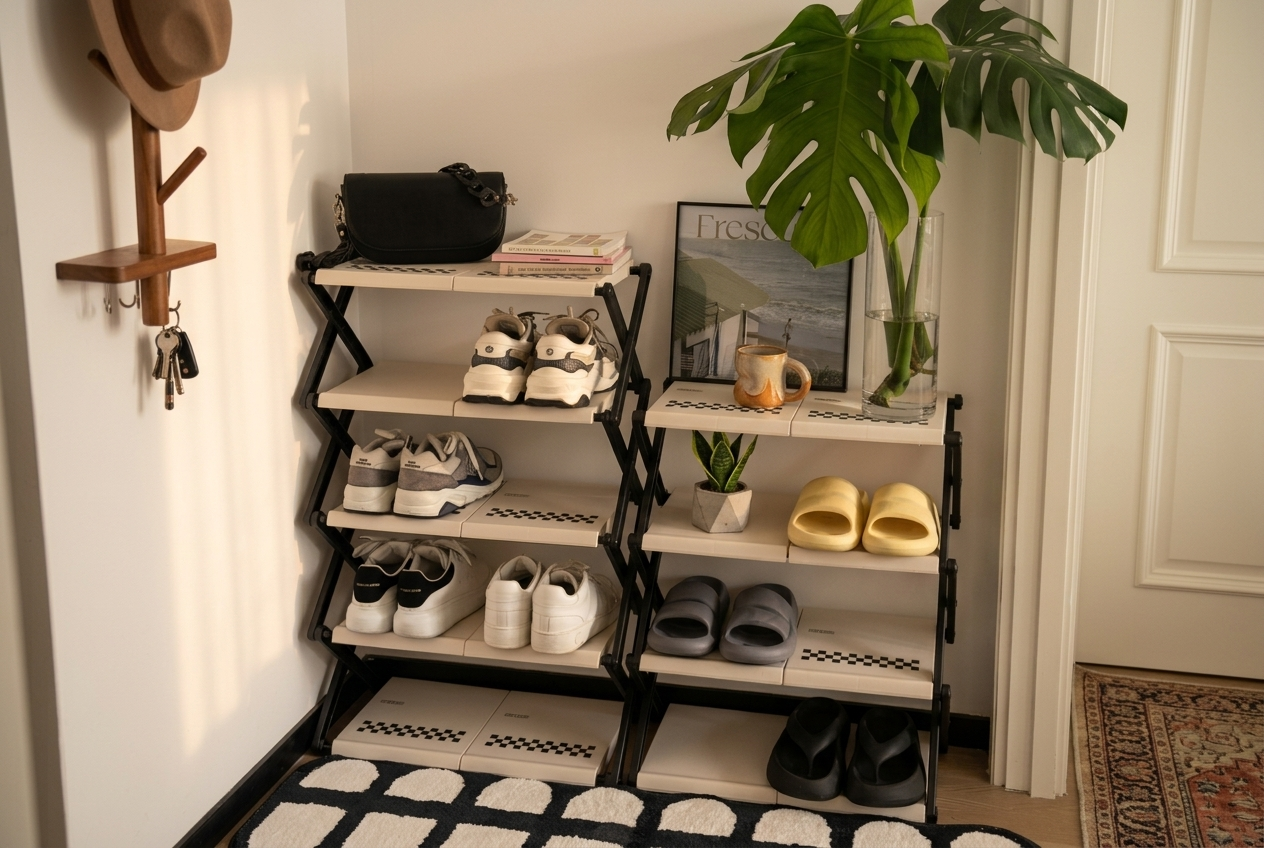
A good shoe rack is the single most important piece of shoe storage you can buy. For small closets, choose a slim vertical shoe rack that uses height instead of floor space. A tiered design lets you see every pair at a glance without bending down and digging through a pile.
If you have room near your front door, a low shoe rack or bench with storage underneath keeps your daily shoes accessible without cluttering the bedroom closet. This one change ends the “shoes scattered by the door” problem permanently.
The key is giving every pair a visible, dedicated spot. When shoes have a home, they go back there. When they do not, they end up wherever you kicked them off.
Seasonal Shoe Rotation
You do not need every pair of shoes on your shoe rack all year. Heavy boots in July and sandals in January are just taking up space you could use for the shoes you actually wear right now.
Pack off season shoes into clear storage boxes and store them on a high shelf, under the bed, or in a storage closet. Clear boxes are essential because you can see exactly which shoes are inside without opening every lid. Label them by season so the swap takes twenty minutes, not an entire afternoon.
This frees up 40 to 50 percent of your shoe rack for the pairs that matter right now. Your shoe storage suddenly has breathing room, and every pair you see is one you can actually wear today.
Hat Storage Ideas That Protect and Save Space
Hat storage is the problem that most closet organizer systems completely ignore. Hats do not fold. They do not stack well. They get crushed when you pile things on top of them, dusty when you leave them out, and lost when you stuff them in drawers.
If you love hats, you know the pain of pulling one out and finding it bent out of shape because something was sitting on it. Or buying a beautiful wide brimmed hat and having nowhere to put it that does not ruin the shape.
Use a Hat Rack for Daily Hats
A hat rack on the wall or behind a door is the most effective hat storage solution. It keeps hats visible, accessible, and in their proper shape. For baseball caps, a vertical hat rack with clips works perfectly. For wider hats, wall hooks spaced far enough apart prevent the brims from pressing against each other.
The best part about a hat rack is that it doubles as decor. A row of hats on a wall or behind a bedroom door looks intentional and stylish, not cluttered.
Hat Storage Ideas for Delicate or Seasonal Pieces
For structured hats, wide brimmed hats, or pieces you only wear in certain seasons, individual clear storage boxes with tissue paper inside protect the shape and keep dust out. Stack the boxes on a high shelf to use vertical space efficiently. The clear walls let you see each hat without opening anything.
This approach works for any delicate accessory, not just hats. Scarves, gloves, and seasonal bags can all go in labeled clear boxes when they are out of rotation.
Wall Mounted Hat Storage as Decor
If your hat collection is part of your personal style, lean into it. Wall mounted hat storage ideas like a row of simple wooden pegs or a peg rail turn your hats into a display. This works especially well in entryways, bedrooms, or mudrooms where a hat rack adds character to an otherwise bare wall.
The trick is spacing the pegs far enough apart that each hat has room to hang without touching its neighbor. This keeps the display looking calm and intentional rather than crowded.
EVERY CLOSET. ONE SYSTEM.
Your shoe closet, coat closet, and pantry all need the same thing: a plan
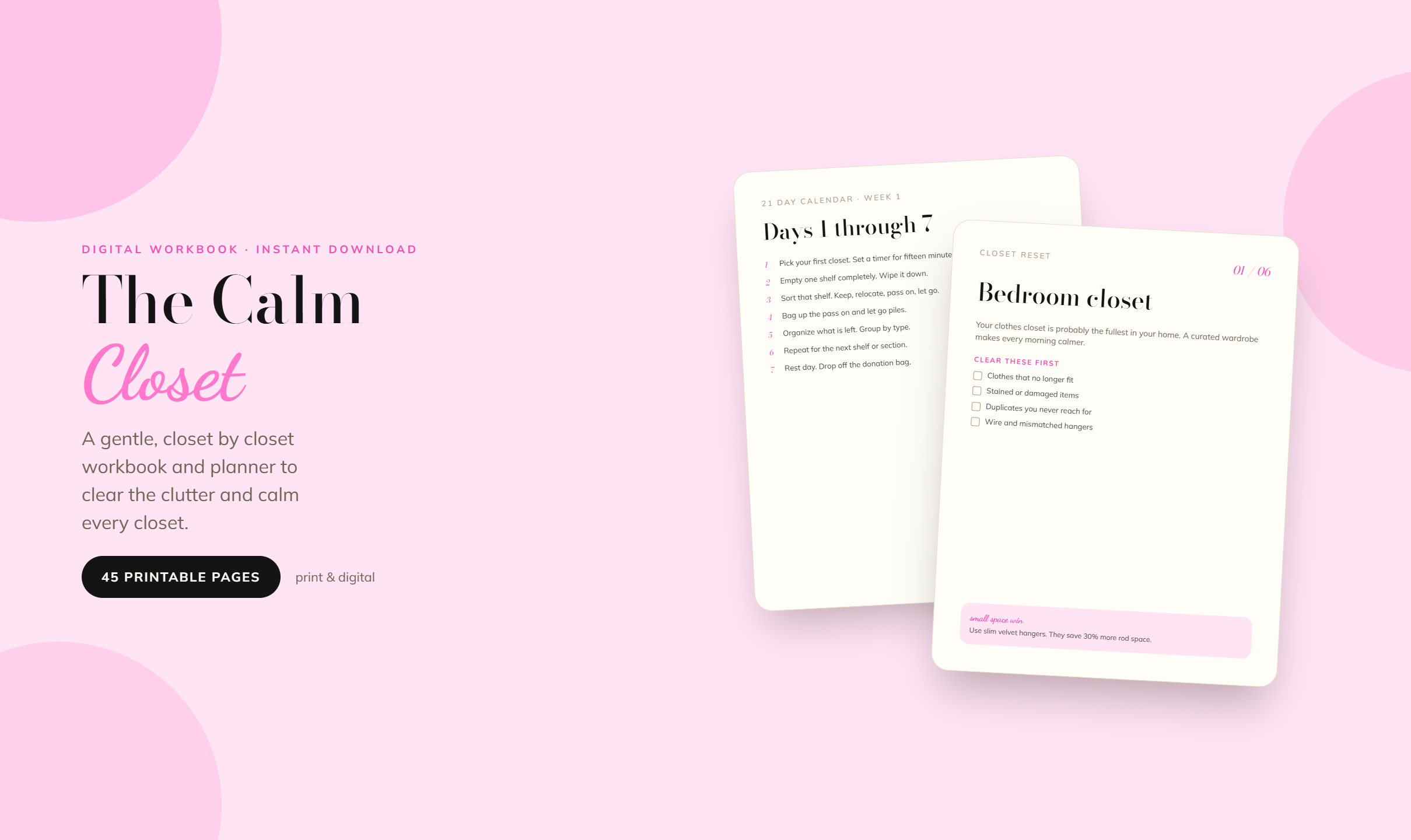
The Calm Closet workbook includes six ready to use closet worksheets (bedroom, coat and entry, linen, pantry and kitchen, bathroom, and utility) plus a blank template for any unique space. One system, applied everywhere.
45 printable pages · fill in digitally or print at home · instant download
Get The Calm Closet workbook →Coat Rack and Entry Closet: Ending the Avalanche
The entry closet is the most neglected space in most homes. Coats, bags, scarves, umbrellas, and reusable shopping bags all compete for the same small space. You open the door and something falls out. You shove it back in and close the door quickly. This is not organization. This is damage control.
The Right Coat Rack Setup
A wall mounted coat rack takes up zero floor space and keeps coats organized by family member or by frequency of use. Daily coats go on the most accessible hooks. Seasonal outerwear gets stored elsewhere.
If you do not have a coat closet at all, a slim freestanding coat rack in the entryway serves the same purpose. Choose one with enough hooks for the coats and bags your household grabs every day, and nothing more. The coat rack is for daily rotation, not long term storage.
Layer Your Entry Storage
A coat rack alone cannot solve an entire entryway. Pair it with a small shelf above for hats and gloves, a basket or storage box below for scarves and accessories, and an over the door organizer on the inside of the closet door for smaller items that would otherwise scatter.
This layered approach gives everything a home without needing a closet remodel. Each layer handles a different category: hanging items on the coat rack, small items behind the door, seasonal items in boxes above. When you walk in the door, everything has a place to land.
The Same System Works in Your Pantry and Beyond
Here is what most people do not realize: the same organizing principles that fix your shoe storage and hat storage also fix your pantry, your bathroom closet, your linen closet, and every other storage space in your home.
Zones by category. Clear containers so you can see what you have. Daily items at eye level, seasonal items up high. A quick reset routine to keep it maintained.
A pantry with canned goods sorted by type, spices visible at a glance, and snacks in one dedicated zone works the same way as a closet with shoes on a rack, hats on hooks, and seasonal items in clear boxes. The framework is identical. Only the contents change.
Once you learn one system, you never need to learn another. You just apply it room by room.
Quick Reference: Everything You Need
- Shoe rack — vertical storage that makes every pair visible
- Hat rack — wall or door mount, protects shape and saves space
- Coat rack — wall mounted, zero floor space
- Clear storage boxes — seasonal rotation for shoes, hats, and accessories
- Over the door organizer — hidden space for scarves, belts, small items
STOP PINNING. START ORGANIZING.
The Calm Closet Workbook
Six ready to use closet worksheets · Capsule wardrobe planner · Seasonal rotation tracker · 21 day challenge
45 printable pages · Instant download · Works digitally or printed
Get The Calm Closet → $10Join hundreds of women who turned their cluttered closets into calm spaces
Leave a Reply