You have done this before. A free Saturday, a burst of motivation, maybe even a trip to the store for matching bins. You pull everything out of the closet, fold it all perfectly, put it back in neat rows, and stand there for a moment feeling like you finally figured it out. The closet looks calm. Organized. Like it belongs to someone who has their life together.
Then three weeks pass. The bins are still there, mostly empty, while everything else has quietly climbed back into a pile. The folded stacks slumped. The hangers got crammed again. The shelf became a dumping ground for things you did not know where else to put. And you are standing in front of the same messy closet wondering what went wrong.
Nothing went wrong with you. Something went wrong with the method. Most closet organization advice gives you the reset without giving you the system that keeps it in place. It shows you what a clean closet looks like but never explains how to make it stay that way. And without that second part, every reset has an expiration date.
WHAT IS IN THIS POST
- The real reason your closet keeps getting messy
- The 4 root causes most organizing advice ignores
- The organizing system that prevents the mess from returning
- What 21 days of small steps actually adds up to
- Every product in one shoppable list
The Real Reason Organizing Never Sticks
Most attempts to organize a closet fail for the same quiet reason: they start with storage instead of decisions. You buy bins before you have let anything go. You rearrange clothes without removing the ones you never wear. You make the closet look organized without actually organizing it. The clothes you are not wearing are still there, now in a labeled container instead of a pile.
A closet does not have a space problem. It has a decision problem. Every item stuffed onto a shelf is a decision you postponed. And postponed decisions are what make a closet feel heavy long before it looks messy. The sweater you might wear next winter. The jeans that might fit again. The top that was expensive so you cannot let it go even though you have not touched it in two years.
Until you make those decisions, no amount of bins, hangers, or shelf organizers will keep the closet calm. The products come second. The decisions come first. If you want a guided framework for making those decisions without the overwhelm, my 5 step closet organizing system walks you through it shelf by shelf.
The 4 Root Causes Most Organizing Advice Ignores
1. Too Many Clothes for the Space
This is the root cause nobody wants to hear. Your closet is not too small. You have too many clothes for the closet you have. And until the volume matches the space, no organizing trick will keep it tidy. A closet packed to 100 percent capacity looks cluttered even when every item is technically in its place. A closet at 80 percent capacity looks calm even without fancy organizers.
The fix is not minimalism. It is honesty. Go through every item and ask one question: have I worn this in the last six months? If the answer is no and it is not seasonal, it does not earn space in your active closet. Store it, donate it, or let it go. This single step usually removes 20 to 30 percent of what is in there, and the closet immediately starts breathing.
Once the closet has room, the clothes you keep deserve to look their best. A garment steamer hanging on the inside of your closet door means wrinkled pieces get a quick steam instead of sitting in the “I need to iron this” pile for weeks. Getting dressed in the morning goes from stressful to effortless when every item is ready to wear.

Image credit: Decoist
2. Wrong Hangers Eating Space
Bulky plastic hangers are three times thicker than they need to be. They eat 30 to 40 percent of your rod space just by existing. Clothes slide off the smooth surface onto the floor. You cram more hangers onto the rod to compensate, and suddenly you cannot see anything past the front row.
Slim velvet hangers are one third the width. The velvet grips fabric so nothing slides. You gain enough rod space to fit an entire extra season of clothes without removing a single item. This is the single most impactful physical change you can make in a small closet, and it costs less than a takeout dinner.
If you still need more hanging space after the hanger swap, an adjustable second rod doubles your capacity by using the dead air below the existing rod. No drilling, no tools, completely renter friendly. For apartments without enough closet space at all, a freestanding clothing rack gives you a full extra hanging section that looks stylish in the bedroom.

3. No Zones, No Categories
When clothes go back “wherever they fit,” the closet has no structure to maintain. Tops mixed with pants. Work clothes next to gym clothes. Scarves shoved between sweaters. There is no logic, so there is nothing to return to when things drift.
Create zones: daily wear at eye level, off season on the top shelf in clear storage boxes, accessories on the back of the door, folded items separated by shelf dividers so stacks stay upright. Use drawer organizers for underwear, socks, and bras so every small item has its own compartment instead of a tangled pile.

Image credit: The Orderly Space
For deeper shelves where things disappear at the back, pull out baskets slide forward so you can see and reach everything without unstacking. A jewelry organizer on the wall or inside the closet door keeps necklaces, earrings, and rings visible and tangle free instead of buried in a box you never open.
If your closet has one rod and one shelf and that is it, stackable closet shelves add adjustable vertical storage that turns a single shelf into three. This is the upgrade that makes a basic rental closet function like a custom one. Use a label maker to mark every bin, box, and shelf so you always know where things belong without guessing.
When every category has a home, putting things back takes zero thought. And zero thought is the only thing that scales. For more specific ideas on how to set up zones in a tiny closet, see my 15 small closet organization ideas.
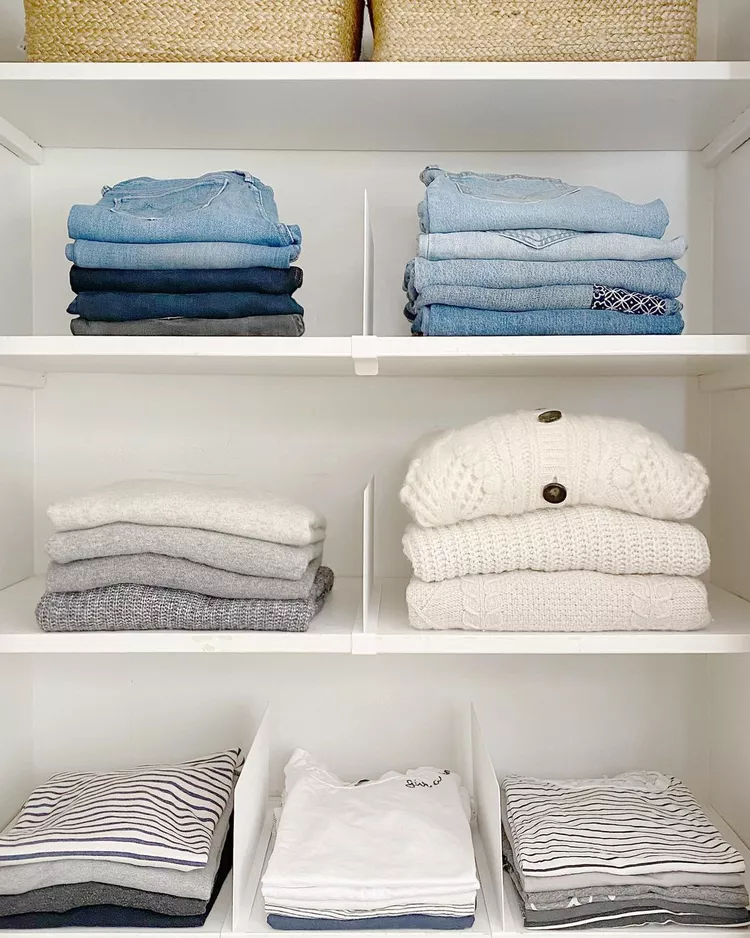
Image credit: @breathing.room.home
4. No Maintenance Habit
This is the one that kills every reset. You did the work. It looked amazing. But there was no daily habit to hold it in place. Without a small routine, entropy wins every single time. The closet does not get messy because you are disorganized. It gets messy because organized spaces require maintenance and nobody told you that part.
The fix is absurdly small: a two minute evening reset. Before bed, hang up anything you tried on, return out of place items to their zone, and close the closet doors. What you did not wear goes straight into a slim laundry hamper inside the closet instead of onto the bedroom chair. That is it. Two minutes. This tiny routine is the difference between a reset that lasts three weeks and a closet that stays calm for years.

The Organizing System That Prevents the Mess From Returning
A reset only lasts if a system holds it in place. Not a rigid routine that takes an hour every day. Just a few minutes woven into the rhythm you already have. Here is what actually works:
Daily (2 Minutes)
The evening reset. Hang up what you tried on. Return anything out of place to its zone. Close the closet. Dirty clothes go directly into the hamper, not onto the chair. This is the single most important habit on this entire list. It prevents the small daily drift that compounds into full chaos by the weekend.
Weekly (10 Minutes)
One day a week, take ten minutes to scan every shelf and rod. Straighten folded stacks. Push hangers back to even spacing. Check the floor for anything that fell. Wipe down one shelf. This weekly scan catches small problems before they become big ones. Think of it as a five second glance at every zone. If something looks off, fix it now instead of in three weeks.
While you are there, toss in a few cedar blocks between your sweaters and in your shoe zone. They keep everything smelling fresh and repel moths naturally. Replace them every few months and your closet will smell clean every time you open it.
Monthly (20 Minutes)
Once a month, pull out one category and evaluate. This month: tops. Next month: pants. The month after: accessories. For each item, one question: did I wear this in the last 30 days? If not, does it belong in active rotation or should it move to seasonal storage? This rolling review means you never need another full Saturday purge. The closet stays edited because you edit it continuously in small bites.
Seasonal (30 Minutes, Twice a Year)
Swap seasonal clothes in and out. Pack off season items into clear storage boxes or vacuum bags and store them in under bed storage bins or on the top shelf. Protect nicer pieces in garment bags to keep them dust free and moth free. Bring current season items forward. This frees up 40 to 50 percent of your active closet space and means every item you see is something you can actually wear right now.

This schedule adds up to less than 15 minutes a week. That is the real cost of a permanently calm closet. Not hours. Not weekends. Minutes, spread across a rhythm you barely notice after the first two weeks. For a complete cleaning routine for the rest of your home, see my 15 minute apartment cleaning routine.
Shop Everything In This Post
Here is every product mentioned above, in one place. The five that make the biggest difference first, one from each part of the system, then the rest of the list.
The 5 That Matter Most
Garment Steamer (Root Cause 1)
 Shop Garment Steamer
Slim Velvet Hangers (Root Cause 2)
 Shop Slim Velvet Hangers
Over the Door Organizer (Root Cause 3)
 Shop Over the Door Organizer
Slim Laundry Hamper (Root Cause 4)
 Shop Slim Laundry Hamper
4 Pack Clear Storage Boxes (Seasonal Swap)
 Shop Clear Storage Boxes
Everything Else Mentioned Above
What 21 Days of Small Steps Actually Adds Up To
Picture opening the closet and knowing exactly what is behind the door. Every hanger holds something you actually wear. Every shelf has a job. Getting dressed takes two minutes instead of twenty. You stop buying duplicates because you can see everything you own. You stop feeling frustrated every morning because the closet is no longer working against you.
That is not a fantasy reserved for bigger homes or people with walk in closets. It is what happens when a closet by closet system replaces a single overwhelming Saturday. When a two minute daily habit replaces willpower. When decisions replace storage.
By day seven of a guided reset, the hardest closet in your home is done. By day fourteen, the evening reset is automatic. By day twenty one, every closet has been through the process and the organizing system is locked in. Three weeks. That is all it takes to permanently change how your closet functions.

Image credit: Urban Organyze
A calm closet is not about owning less. It is about keeping only what earns its place and having a system that keeps it there.
More closet and organizing guides:
- 5 Step Closet Organizing System
- Small Bedroom Closet Ideas
- 15 Small Closet Organization Ideas
- 19 Renter Friendly Closet Ideas
- The 15 Minute Cleaning Routine
- The Small Space Cleaning Routine
YOUR CLOSET IS ORGANIZED. NOW KEEP IT THAT WAY.
The Calm Closet
Printable worksheets for every section of your closet.
A step by step declutter system so you only keep what you actually wear.
A clothing storage plan that keeps everything organized permanently.
Printable guide · Instant download · Works digitally or printed
Get The Calm Closet · $6.99Join hundreds of women who finally stopped re-organizing the same closet
Prices listed were accurate at the time of writing and may change. Always check the current price on the product page before buying.
This post contains affiliate links. If you make a purchase through these links, I may earn a small commission at no extra cost to you. I only recommend products I actually use and love.
Leave a Reply