A small living room is not the problem. The real issue is when it does not feel like a place you actually want to be. You come home, sit down, and something feels off. Maybe it is cramped. Maybe it feels unfinished. Or maybe it just does not have that warm, cozy feeling you were hoping for when you moved in.
Most people try to fix that by copying what they see online. But those spaces are not built for real life. They are built for photos. The living rooms that actually work feel intentional, comfortable, and personal. And more importantly, they solve the small frustrations you notice every single day but never quite address.
These are the small apartment living room ideas that actually change how your space feels. Not more stuff. Better choices.
WHAT IS IN THIS POST
- Why one bold choice beats ten safe ones
- The lighting swap that changes your entire evening
- How to layer neutrals without looking boring
- Furniture that gives space back instead of taking it
- The layout mistake most people make before buying anything
Go Bold Instead of Playing It Safe
A lot of small living rooms feel forgettable because everything plays it safe. Neutral sofa, light walls, nothing that really stands out. That is usually where the space starts to feel flat. You decorated, but the room still does not feel like yours.
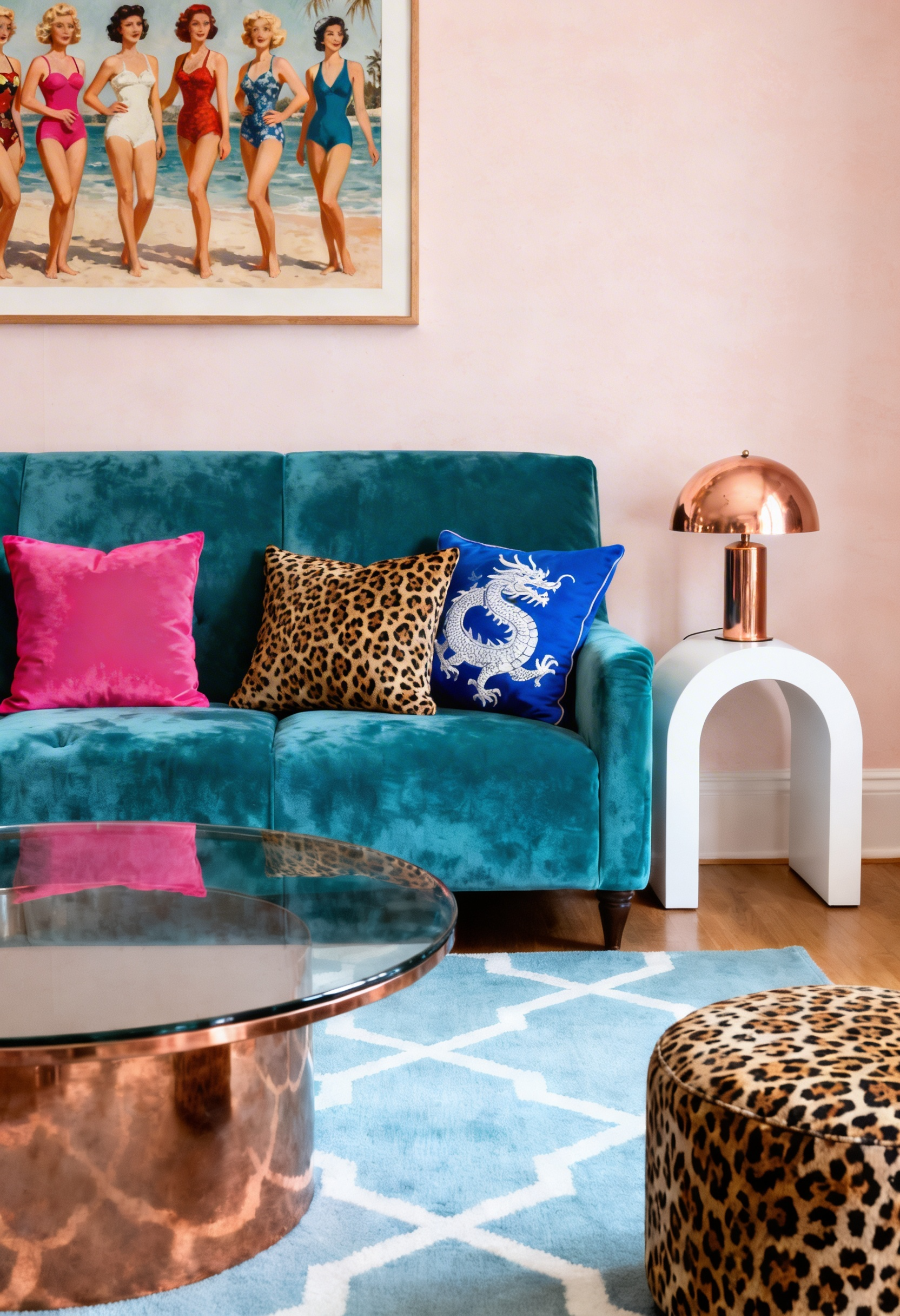
What changes everything is one strong choice. A deep colored velvet sofa that anchors the room. A piece of oversized wall art that draws your eye the moment you walk in. A textured area rug that adds depth and warmth underfoot. Suddenly the focus shifts. The room feels designed instead of thrown together.
This is also where people make the mistake of buying too many small items instead of one piece that actually makes impact. A statement sofa or a large piece of art can completely change how your space feels without taking up more room. If your space still feels “meh” after decorating, chances are you are missing that one anchor piece.
Keep It Light but Not Empty
Light spaces always feel bigger. But when there is no warmth, they also feel cold and unfinished. That is where most small living rooms go wrong. The walls are light, the furniture is light, and the room looks spacious but feels like nobody lives there.
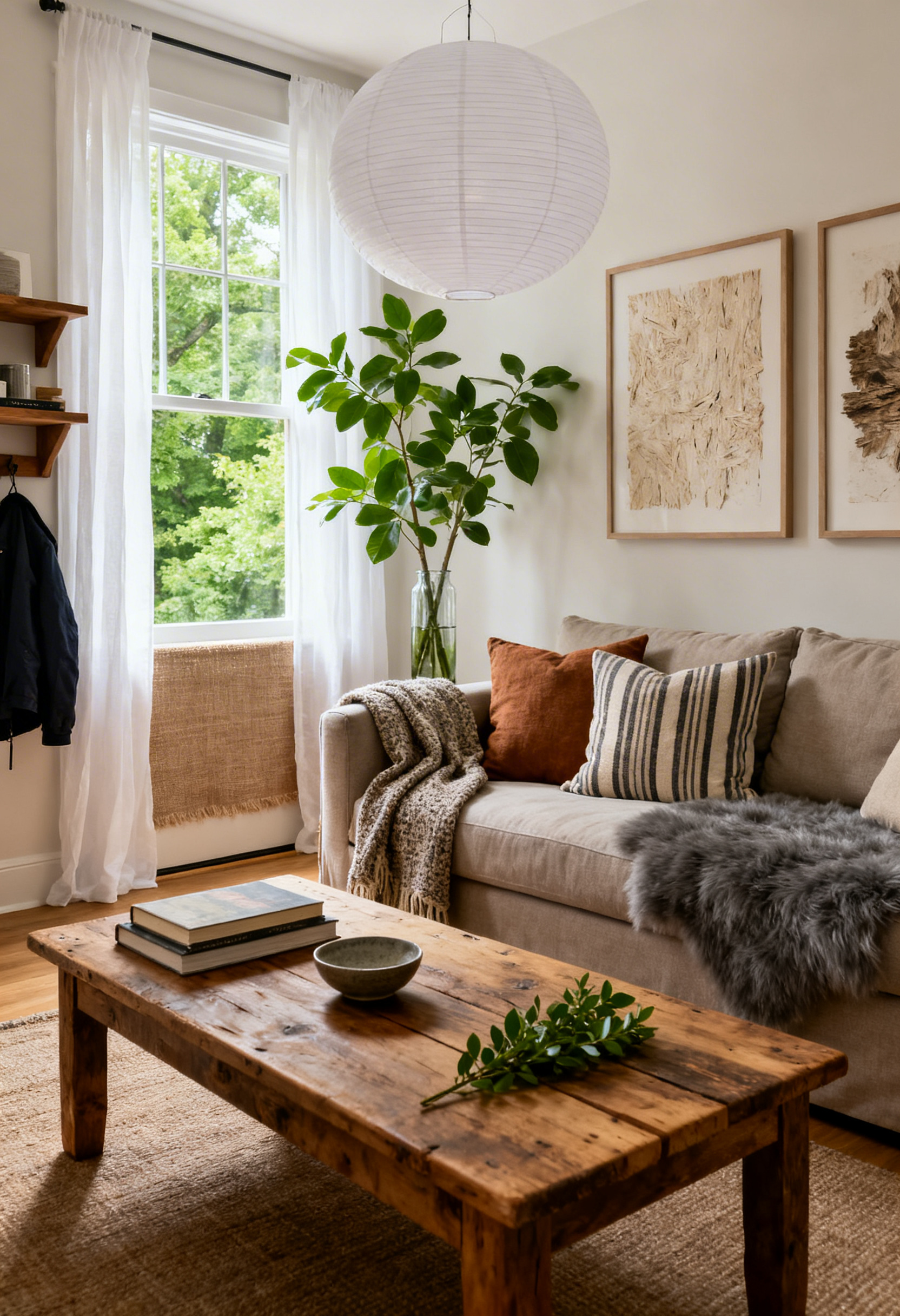
Instead of adding more furniture, the shift usually comes from texture. Soft linen cushion covers you want to lean into. A jute rug that actually feels good under your feet. A knit throw draped over the arm of the sofa. These small changes make a space feel complete without making it feel crowded.
A textured rug or linen cushions can do more for your living room than adding another chair ever will. If your space feels empty but also somehow cluttered at the same time, this is usually the fix.
Make It Feel Like a Place You Want to Stay In
Some rooms look good in photos but do not feel good to sit in. That is often because the lighting is wrong.
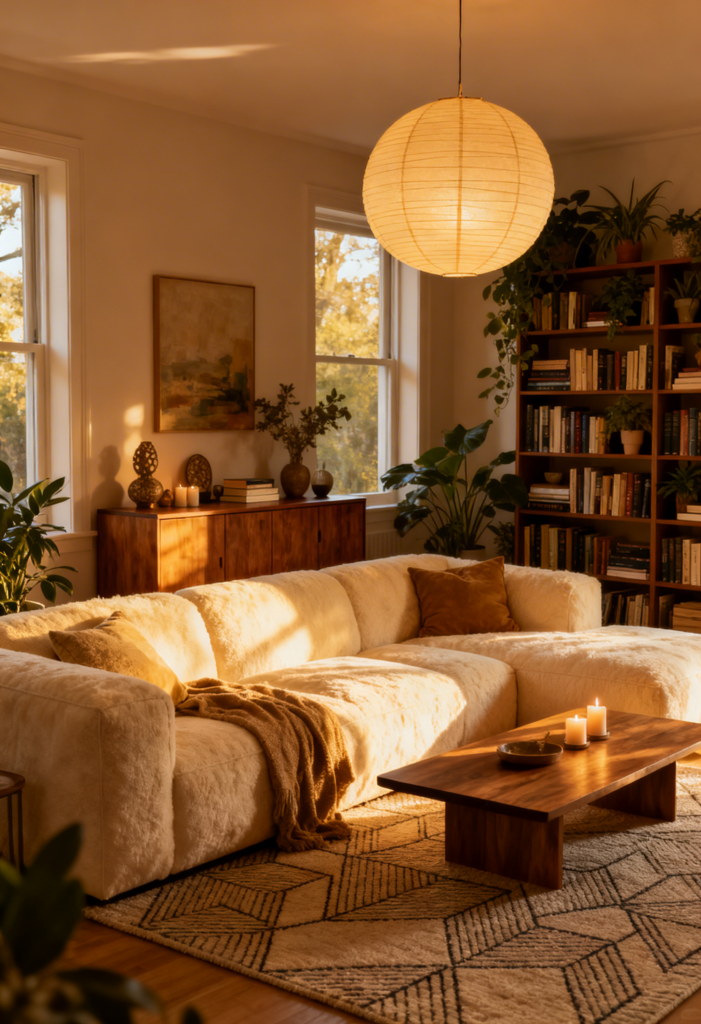
Bright white overhead light makes everything feel flat and slightly uncomfortable, especially in the evening. The moment you switch to warmer lighting and layer it with a floor lamp or soft glow, the entire mood changes. Your brain registers the room differently. It stops being a lit space and starts being a retreat.
Add a chunky knit throw blanket you actually use, not just for styling. Something soft, something you reach for without thinking. That is when your living room starts to feel like a place you want to stay in, not just look at.
A warm floor lamp and a soft throw are small upgrades, but they completely change how your evenings feel at home. For more lighting ideas, see my guide on apartment decorating on a budget.
THE LIVING ROOM LOOKS GOOD. BUT DOES IT WORK?
A beautiful room only feels calm when it is also organized.
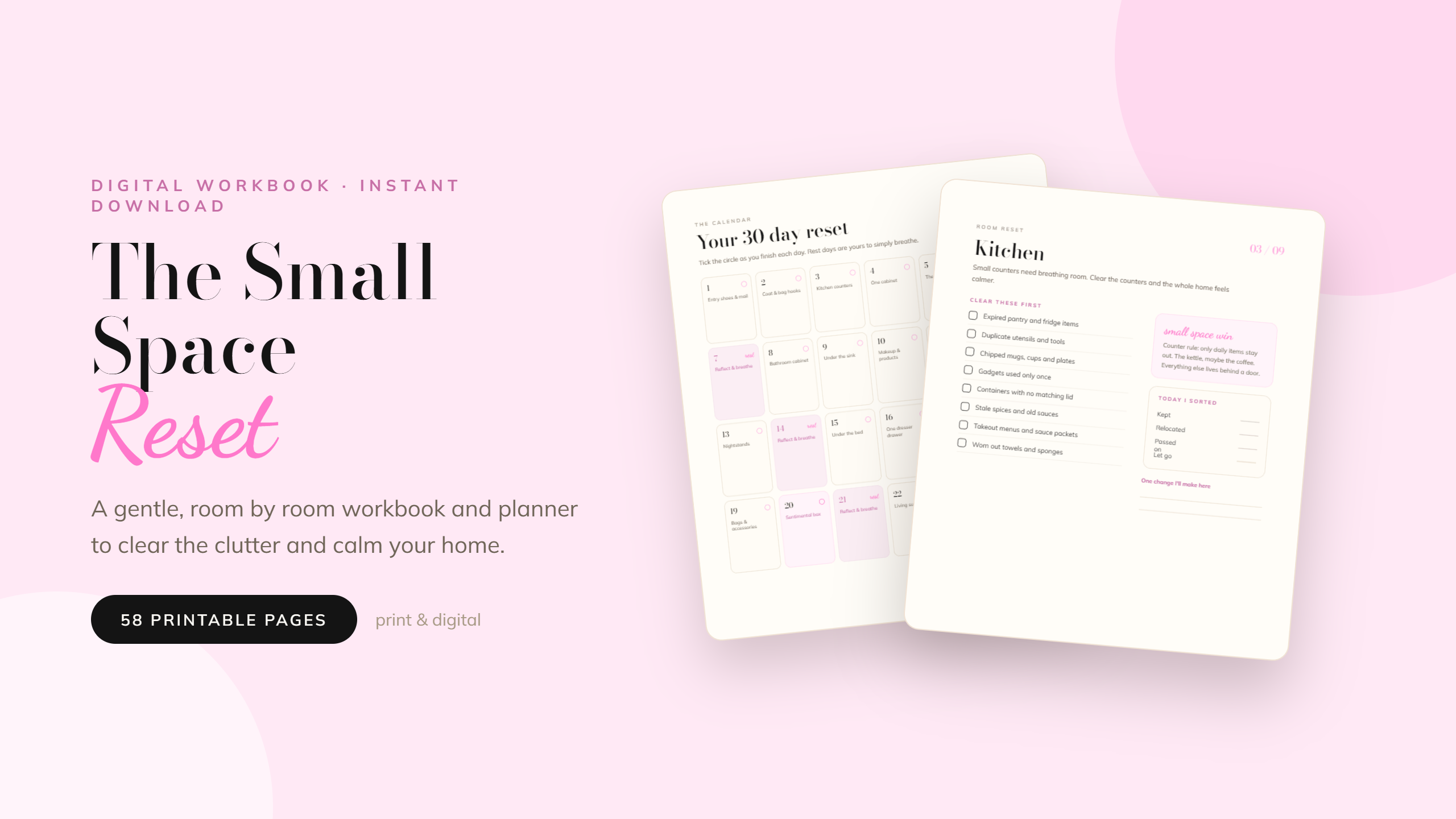
The Small Space Reset gives you a room by room organizing system for your entire apartment. 9 worksheets, a 30 day guided plan, daily routines, and storage principles that keep your living room looking as good as the day you styled it.
Get The Small Space Reset · $12.99Layer Neutrals Instead of Mixing Everything
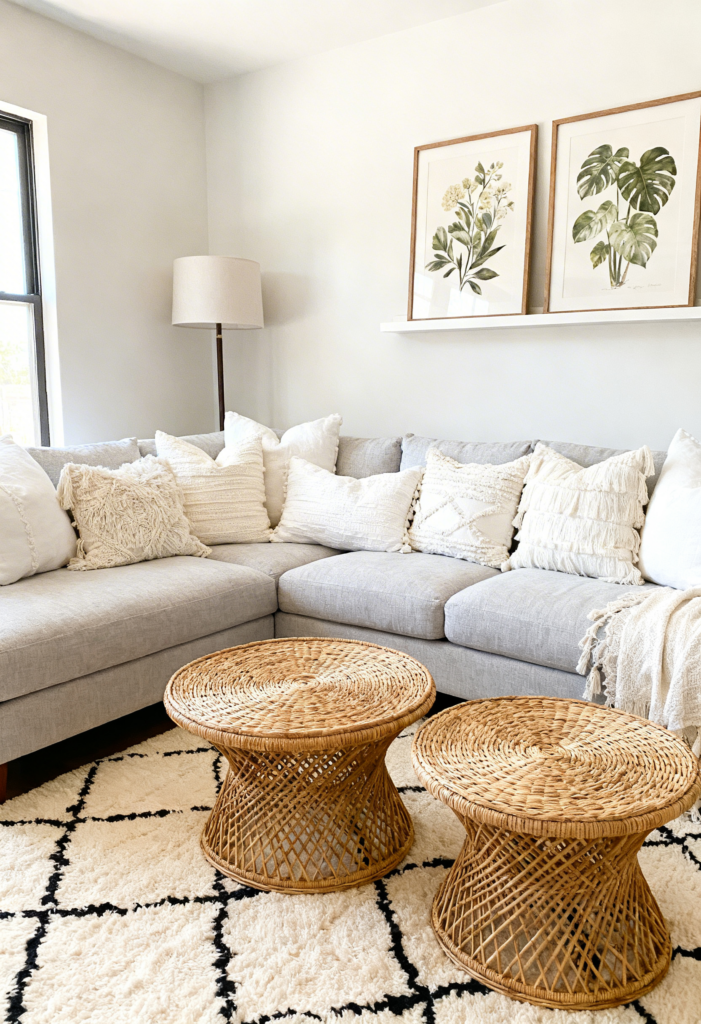
When you mix too many colors, things quickly start to feel chaotic. That is why layered neutrals work so well in small spaces. Different shades, different textures, soft contrasts. That is what creates depth while keeping everything calm.
A boucle cushion next to linen. A diamond pattern rug under a rattan coffee table. A velvet throw next to a cotton pillow. These combinations feel effortless but make a big visual difference. This is one of those approaches that always looks good and never feels overwhelming.
The trick is not matching everything. It is keeping everything in the same warm tonal range while varying the textures. Your eye reads variety without reading chaos.
Choose Furniture That Gives You Space Back
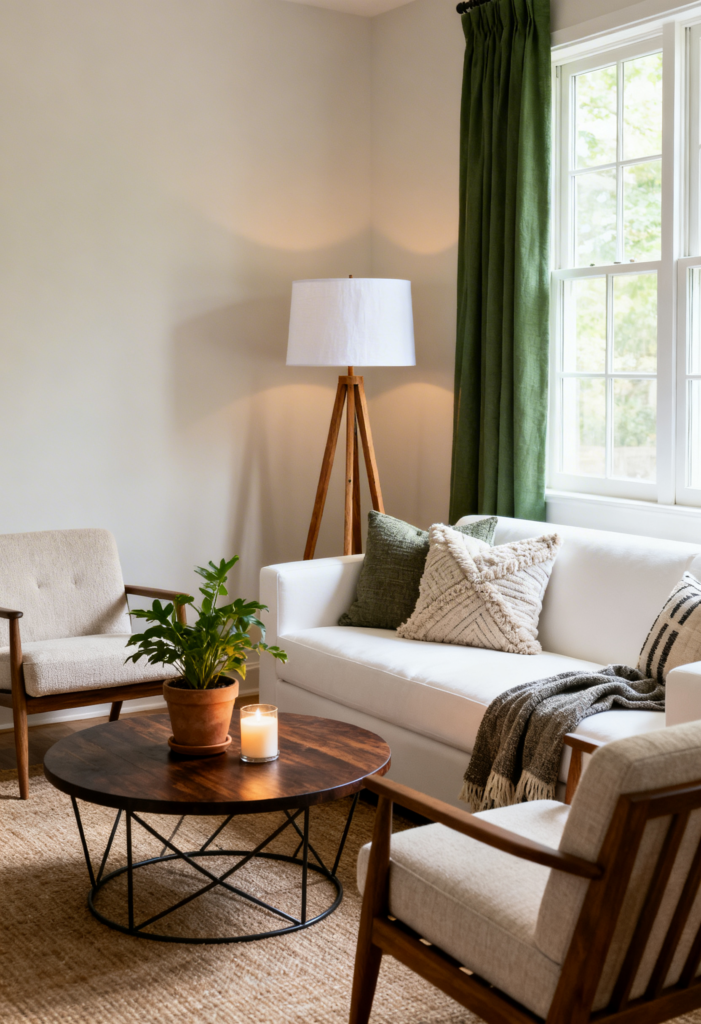
Furniture can either make your space feel tight or open it up completely. Heavy, bulky pieces block light and make everything feel smaller than it actually is. The moment you switch to slimmer furniture with legs or open shapes, the room starts to breathe again.
A sofa with visible legs lets light flow underneath instead of blocking it. A round coffee table changes how you move through the space. It feels easier, more natural. An accent chair with a slim profile adds seating without crowding.
These small adjustments often solve problems people try to fix by buying more, when the real issue is how the space flows. If you need your furniture to do double duty, a storage ottoman works as seating, a footrest, and hidden storage for blankets and remotes. For more ideas on making a small living space feel bigger, see my guide on studio apartment divider ideas.
Use Light to Extend the Room
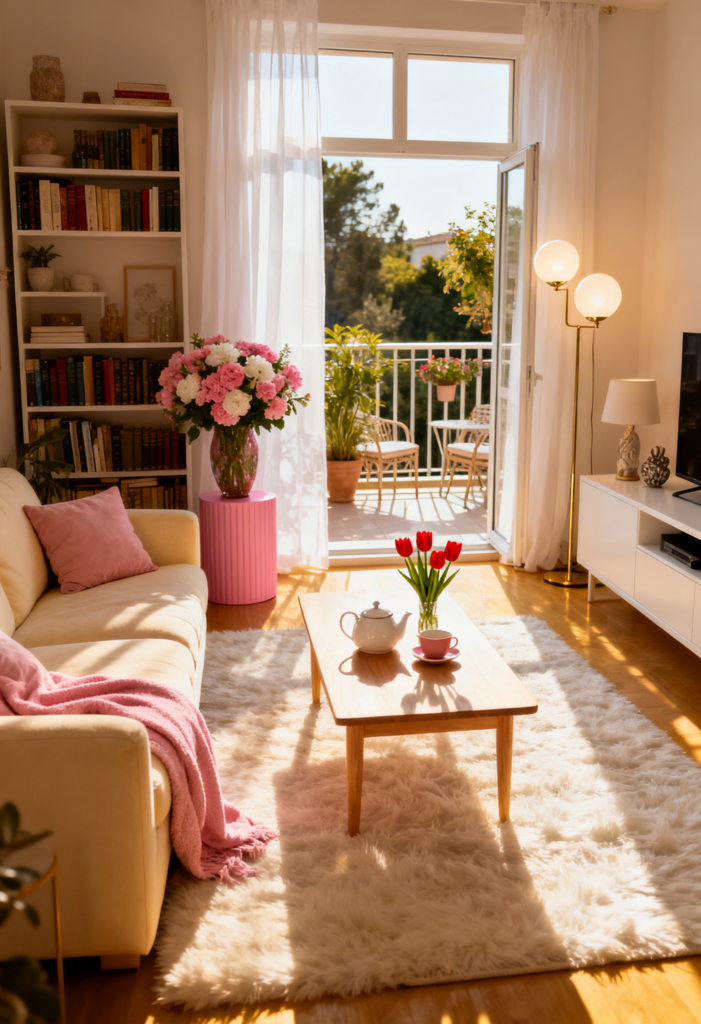
Light is one of the most underrated tools in a small living room. Blocking windows with heavy furniture instantly makes everything feel smaller. Keeping that space open and adding a full length mirror to reflect light can make your room feel noticeably bigger without changing anything else.
Light sheer curtains let natural light in while softening the window and adding warmth. Hang them as close to the ceiling as possible to make the room feel taller. For the full guide on renter safe methods, see my post on how to hang curtains without drilling.
A mirror across from a window, sheer curtains hung high, and one floor lamp in a dark corner. Three changes that make a small living room feel twice its size without moving any furniture.
Rethink Your Layout Before Buying Anything
This is where most people waste money. They keep buying new items, hoping it will fix the space, while the real issue is the layout. Moving your sofa slightly away from the wall, opening up walking space, or removing one bulky piece can completely change how the room feels.
Most small living room frustrations are layout problems disguised as storage problems. The room feels cluttered not because you own too much, but because the furniture blocks the natural flow. Once the layout works, everything else becomes easier.
Try this: push the sofa a few inches away from the wall and place a slim console table behind it. Remove one piece of furniture you added out of habit rather than need. Walk through the room and notice how the air circulates differently. That is the feeling most people are looking for when they search for small apartment living room ideas.
Let It Feel Lived In
The most comfortable spaces are never perfect. They feel lived in. That is what makes you relax when you walk in.
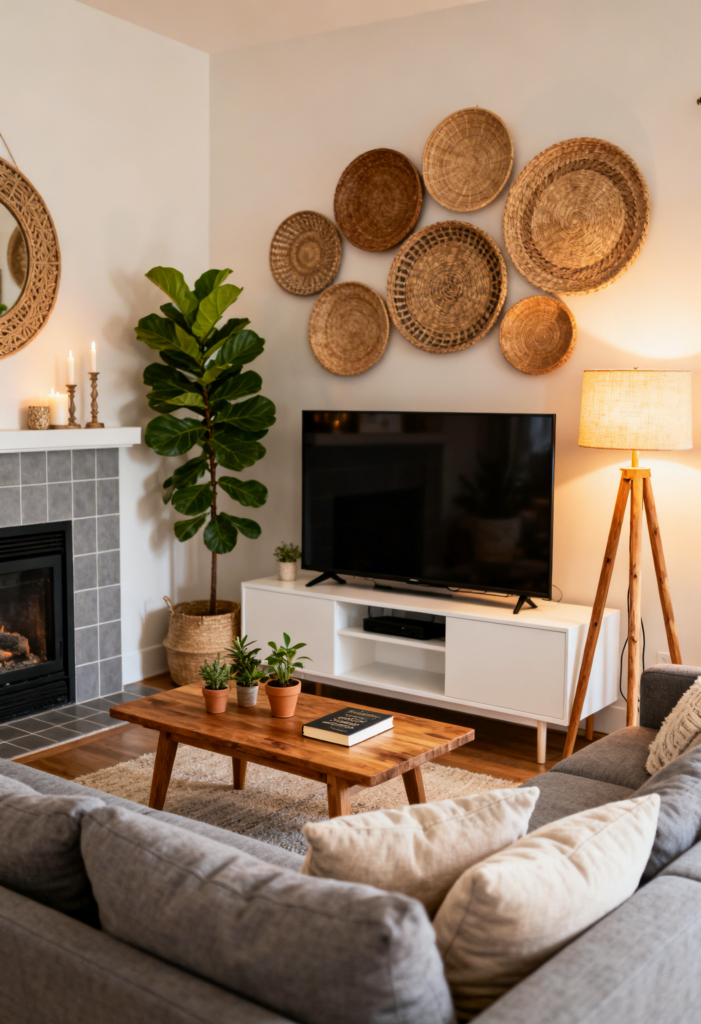
A blanket you actually use. Books you enjoy. A plant that adds life. A candle that makes the room smell like yours. These things make your living room feel personal instead of staged.
You do not need everything at once. Adding pieces over time often creates a better result than trying to finish everything in a day. The best small apartment living room ideas are not about reaching a final state. They are about creating a room that evolves with you and always feels like home.
A small living room is not a limitation. It is an invitation to keep only what makes you feel calm.
EVERY PRODUCT IN THIS POST
Tap any item to shop it directly on Amazon
- Statement pieces: velvet sofa · area rug
- Texture: linen cushion covers · jute rug · diamond rug
- Lighting: floor lamp · sheer curtains · full length mirror
- Furniture: sofa with legs · round coffee table · accent chair · rattan table · storage ottoman
- Finishing: knit throw blanket · snake plant · candle
More small apartment guides:
- Apartment Decorating on a Budget: 22 Items Under $50
- Studio Apartment Divider: 10 Layout Ideas
- How to Hang Curtains Without Drilling
- Small Bedroom Setup Secrets
- 15 Renter Friendly Decorating Ideas
YOUR LIVING ROOM LOOKS GOOD. NOW ORGANIZE THE REST.
The Small Space Reset
Room by room worksheets for every area of your apartment.
A 30 day guided reset with daily routines and storage principles.
Declutter trackers so you can see the progress adding up.
58 printable pages · Instant download · Works digitally or printed
Get The Small Space Reset · $12.99This post contains affiliate links. If you make a purchase through these links, I may earn a small commission at no extra cost to you. I only recommend products I actually use and love.
Leave a Reply