You look around your apartment and feel a weight you cannot quite name. The counters have a layer of things that do not belong there. The closet door stays closed because opening it means dealing with what is inside. There is a corner in the living room where stuff just accumulates, no matter how many times you clear it.
You have tried organizing before. You watched the declutter videos, bought storage bins, maybe even did a full weekend purge. It felt amazing for a few weeks. Then slowly, quietly, everything crept back. The piles returned. The surfaces filled up. And now it feels like the problem is you, like you are just not the kind of person who can keep a home organized.
It is not you. You were never given a system that works for a small space. You were told to own less, buy matching containers, and try harder. None of that addresses why the clutter keeps coming back.
This post gives you the actual framework: a room by room approach to resetting your entire home in 30 days, without overwhelm, without spending a weekend emptying everything at once, and without pretending you need to become a minimalist to live in a calm space.
WHAT IS IN THIS POST
- Why home organization fails in small spaces (and what works instead)
- The 5 step method that works in every room
- Room by room organization ideas for your entire apartment
- Storage ideas that actually prevent clutter from coming back
- How to build daily habits that keep your home calm permanently
- Every product linked at the bottom
Why Home Organization Fails in Small Spaces
Most organizing advice is designed for houses with spare rooms, garages, and walk in closets. It assumes you have somewhere to put things while you sort. It assumes you can close the door on one room while you work on another. It assumes space is available and you just need to use it better.
In a small apartment, none of that applies. There is no extra room. There is no garage. The closet is already full. And every surface is doing three jobs at once because there simply is not enough space for everything to have its own dedicated spot.
This is why buying more storage bins does not work. You are adding more stuff to a space that already has too much stuff. The bins sit on top of other bins. The organizing products become part of the clutter. You spent money and the apartment looks exactly the same.
What works instead is a system that starts with removing, not rearranging. You cannot organize clutter. You can only organize what remains after you have been honest about what earns its place in your home.
The 5 Step Method That Works in Every Room
This framework applies to your kitchen, bedroom, bathroom, living room, closets, and every storage space in your apartment. One method, repeated room by room, until the entire home has been through the process. If you want the closet specific version of this method, see my 5 step closet organizing system.
Step 1: Define the Purpose
Before you touch anything, get clear on what this room needs to do. A kitchen needs to make cooking easy. A bedroom needs to make rest effortless. A living room needs to be a place you actually want to sit. When you know the purpose, you can measure every item against it: does this help the room do its job?
Most people skip this and start pulling things out. Without a purpose, everything feels like it might belong, and the room fills right back up.
Step 2: Remove Everything That Does Not Serve the Purpose
Go through one category at a time. In the kitchen: all utensils, then all dishes, then all food storage. In the bedroom: all clothes, then all bedside items, then all decor. For each item, one question: does this make my daily life easier or my home more peaceful?
Track what leaves. There is something deeply motivating about knowing you removed 63 items from a single room. It makes the effort feel tangible and keeps you going when the next room feels daunting. A label maker helps you mark every box and bin so you never wonder what is inside again.
Step 3: Create Zones
Every organized room has zones. Eye level is for daily essentials. High shelves are for seasonal items. Drawers closest to where you stand are for the tools you use most. This is the organizing principle that turns a chaotic kitchen into one where you can find anything in seconds.
In a small apartment, zones matter more than in a big house because there is no margin for things being in the wrong spot. When your coffee mugs are next to the coffee maker and your cleaning supplies are under the sink where you use them, the right choice becomes the easy choice.
Step 4: Choose Storage That Fits the Zone
Now, and only now, do you think about storage organization. Not before you have removed what does not belong. Not before you know what zones you need. Storage ideas should solve a specific problem in a specific zone, not fill empty space.
Clear storage boxes on high shelves so you can see what is inside without pulling them down. Shelf dividers in closets to keep folded items from collapsing. Over the door organizers for the backs of doors you are currently wasting. A slim shoe rack instead of a pile on the floor. Drawer organizers so junk drawers stop being junk drawers.
The best storage organization is invisible. It keeps things contained and accessible without adding visual noise to the room.
Step 5: Build a Maintenance Routine
This is the step that makes the reset permanent. Without a daily routine, any organizing system slowly falls apart. With one, it maintains itself.
Two minutes per room at the end of the day: put things back in their zone, clear surfaces, close doors and drawers. That is all it takes. The system does the thinking. You just keep it running.
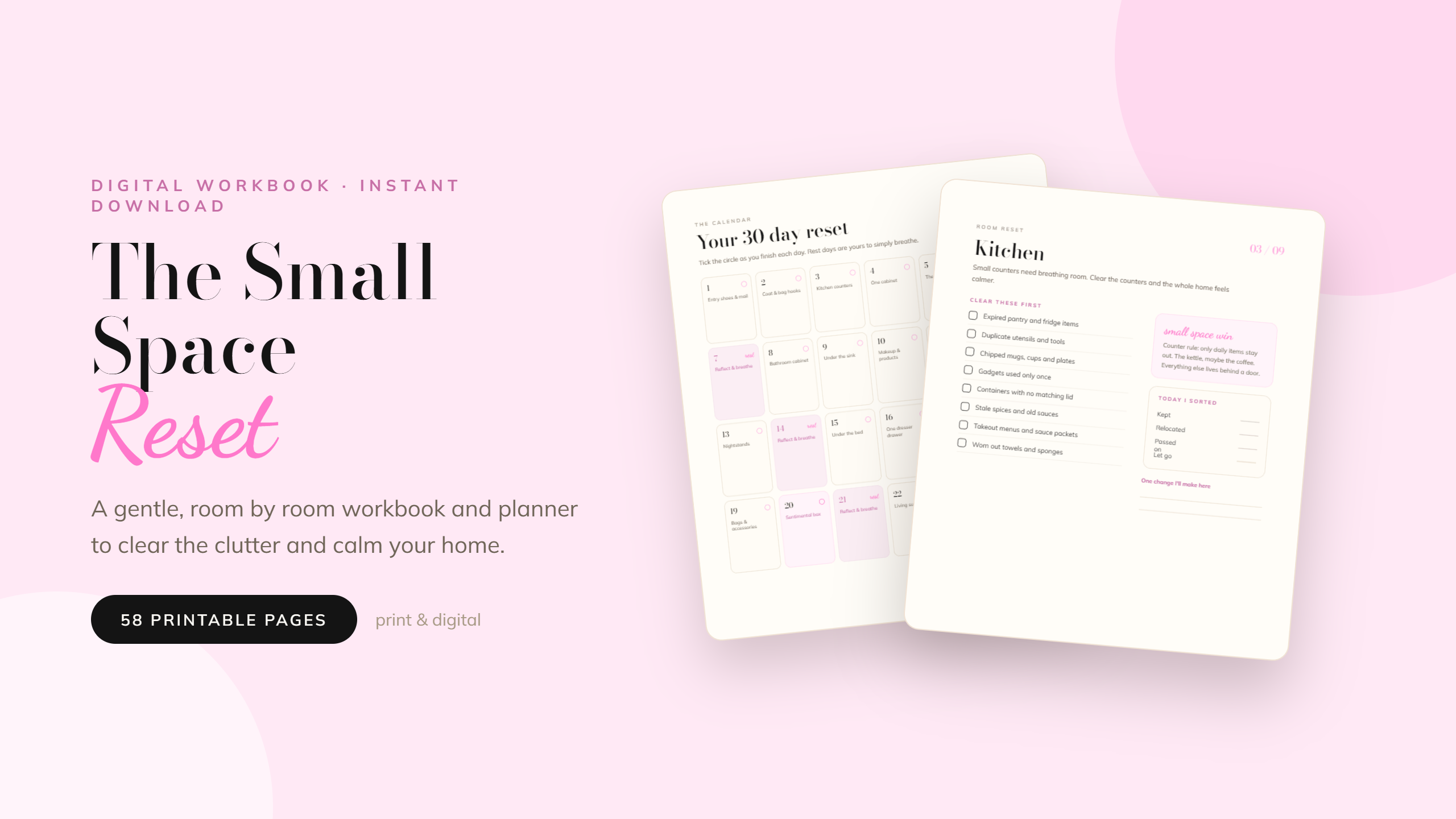
THIS POST IS THE IDEA. THE EBOOK IS THE PLAN.
Reading about organizing is easy. Following through room by room is where most people get stuck.
The Small Space Reset gives you 9 room by room worksheets with the exact 5 step method from this post, plus a guided 30 day reset calendar, daily routines, storage principles, and declutter trackers so you can see your real progress. 58 printable pages.
Get The Small Space Reset · $12.99Room by Room Organization Ideas
Kitchen
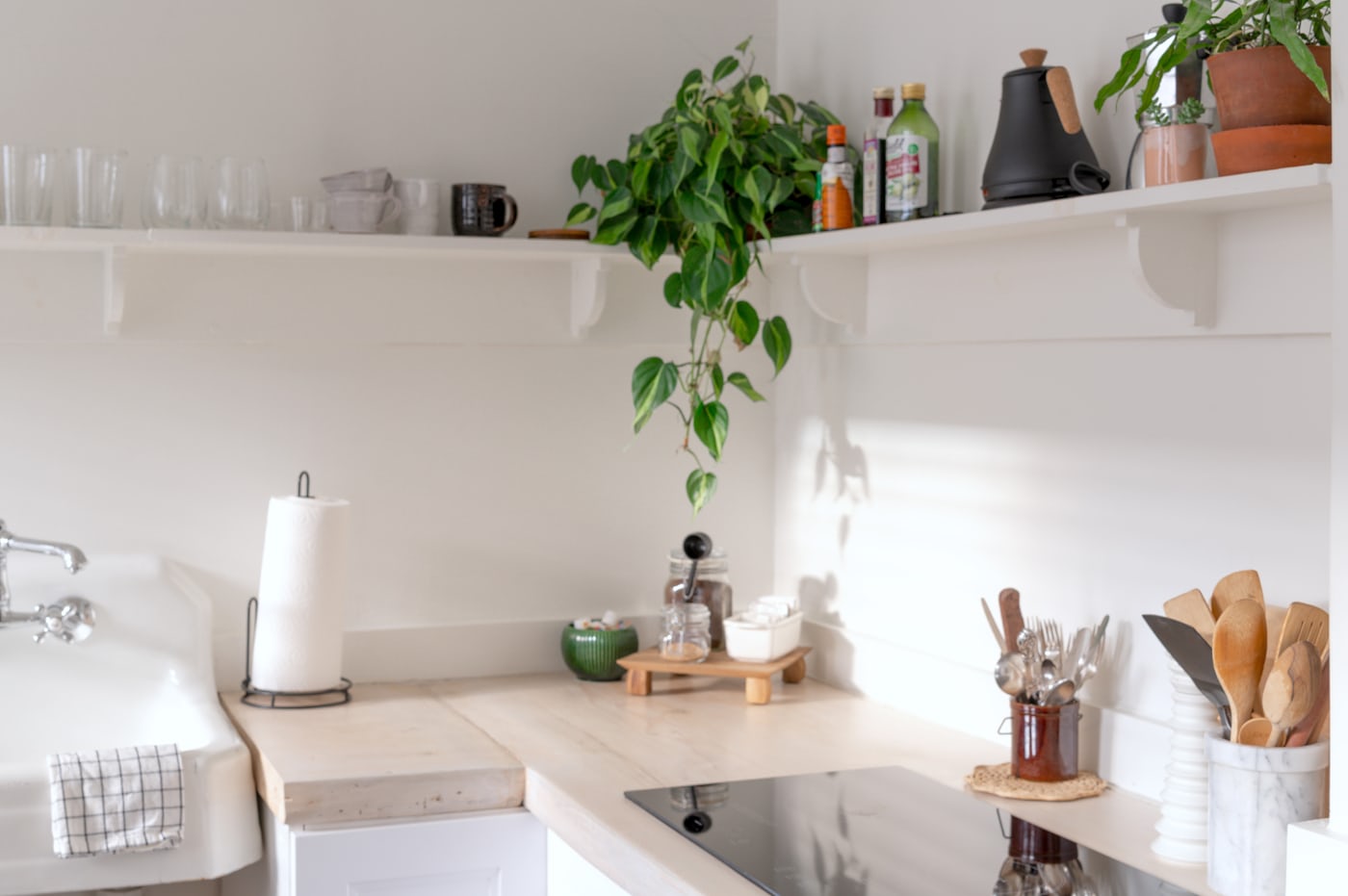
The kitchen is the room that generates the most daily chaos in a small apartment. Start here. Clear the counters of everything except what you use every single day: coffee maker, kettle, one cutting board. Everything else goes in a cabinet or a drawer. The visual calm of empty counters changes how the entire apartment feels.
Inside cabinets, group by use: cooking tools near the stove, glasses near the sink, spices in one spot instead of spread across three shelves. A lazy susan in a corner cabinet instantly makes the back accessible instead of a dead zone where things go to expire. Use drawer organizers so your utensil drawer stops being a tangled mess. Under the sink, an under sink organizer with sliding drawers turns the most wasted space in the kitchen into usable tiered storage.
A set of matching storage jars on the counter for your most used dry goods replaces visual clutter with something that looks curated. These are organization ideas that cost almost nothing and free up shelf space instantly. For a complete kitchen reset, see my small pantry organization guide.
Living Room
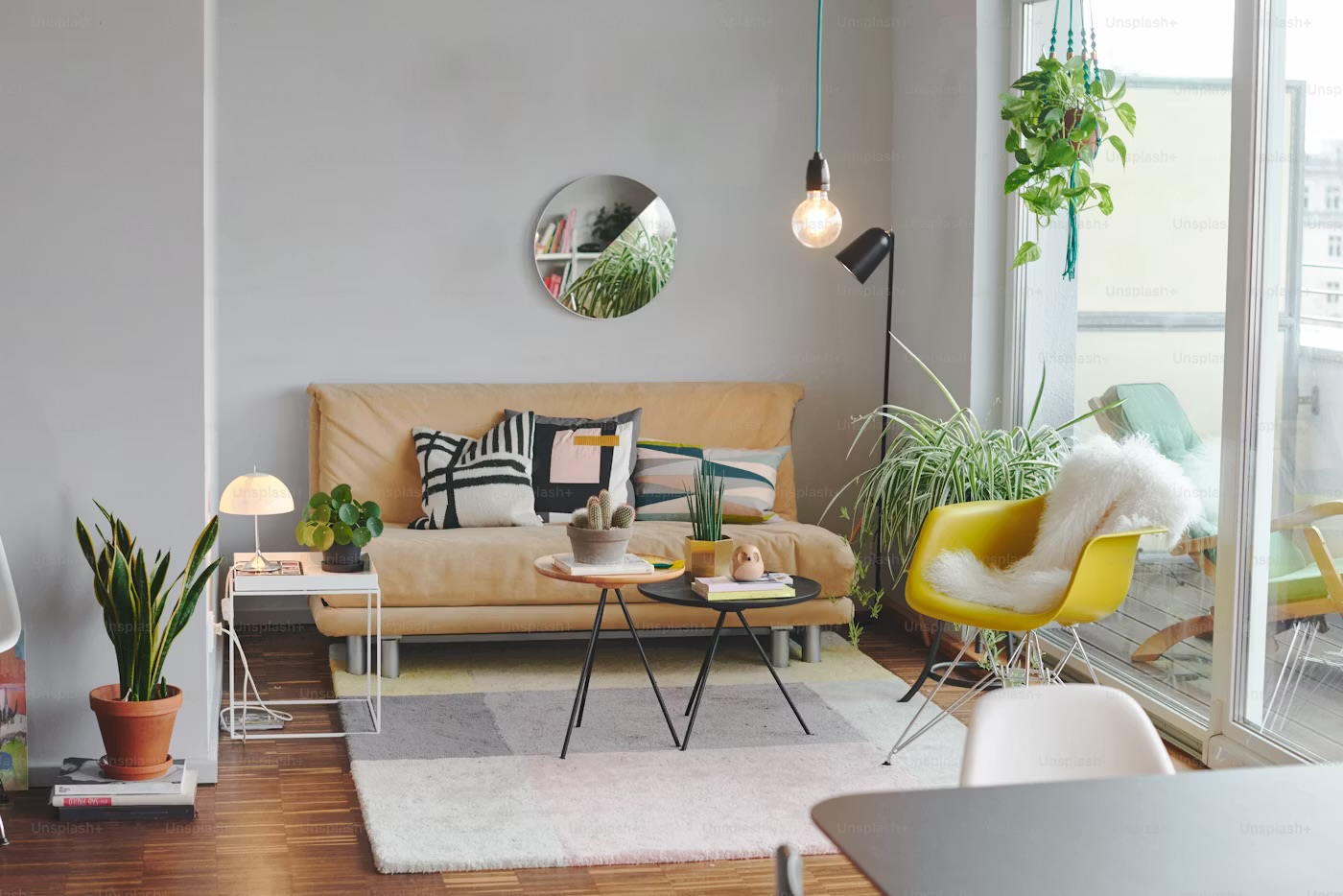
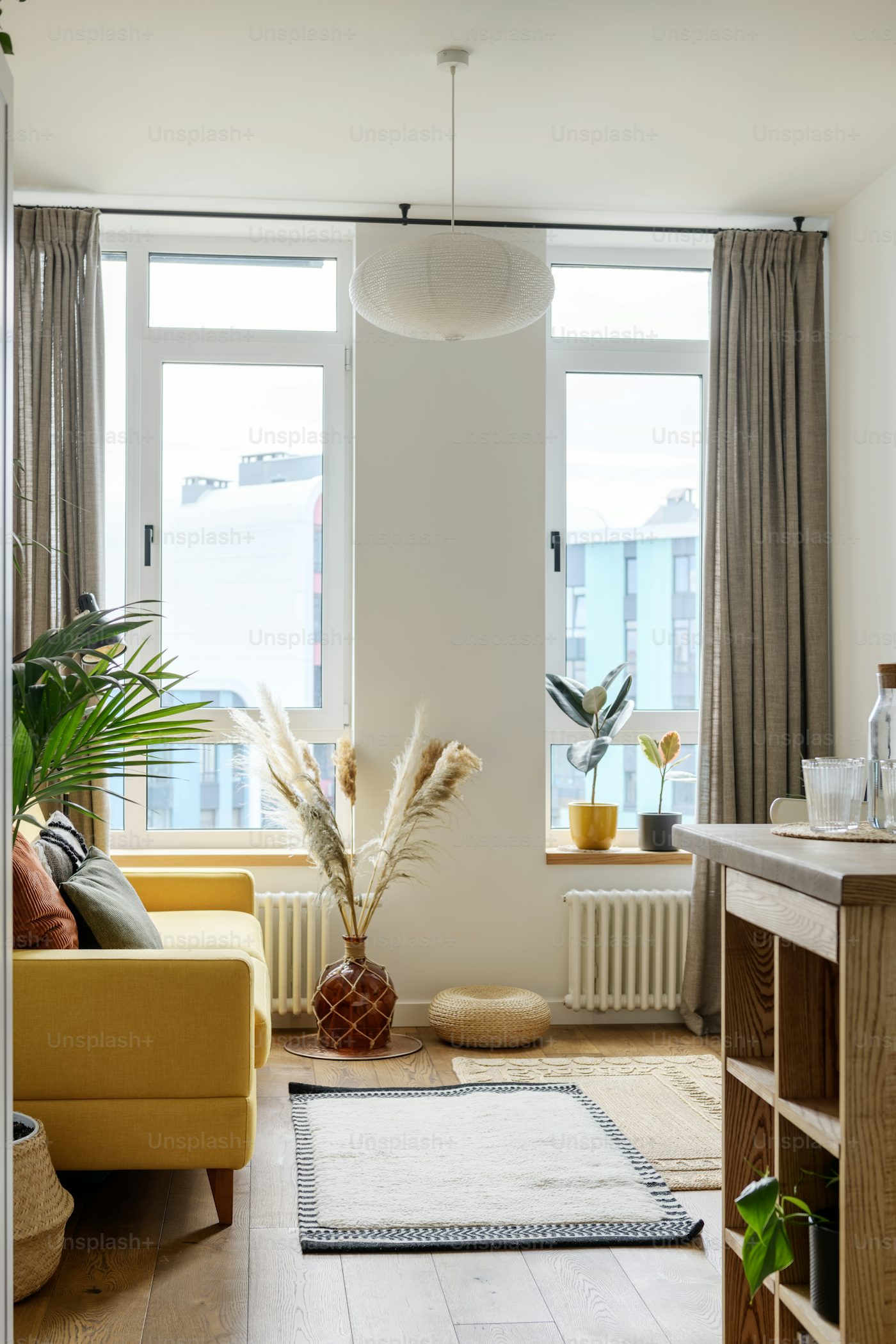
In a small apartment, the living room is often doing double or triple duty: relaxing, working, eating, sometimes sleeping. The key is giving each function a subtle zone and keeping surfaces mostly clear.
A storage ottoman hides blankets and remotes while giving you extra seating when guests come over. A floating shelf replaces a side table and saves floor space. An area rug grounds the seating zone and makes the room feel intentionally designed rather than randomly assembled. Add two or three throw pillows in warm neutrals to make the couch look styled without cluttering it.
The goal is not empty. It is intentional. Every item visible in the room should feel like a choice, not an accident. For more living room ideas, see my small apartment living room ideas.
Bedroom
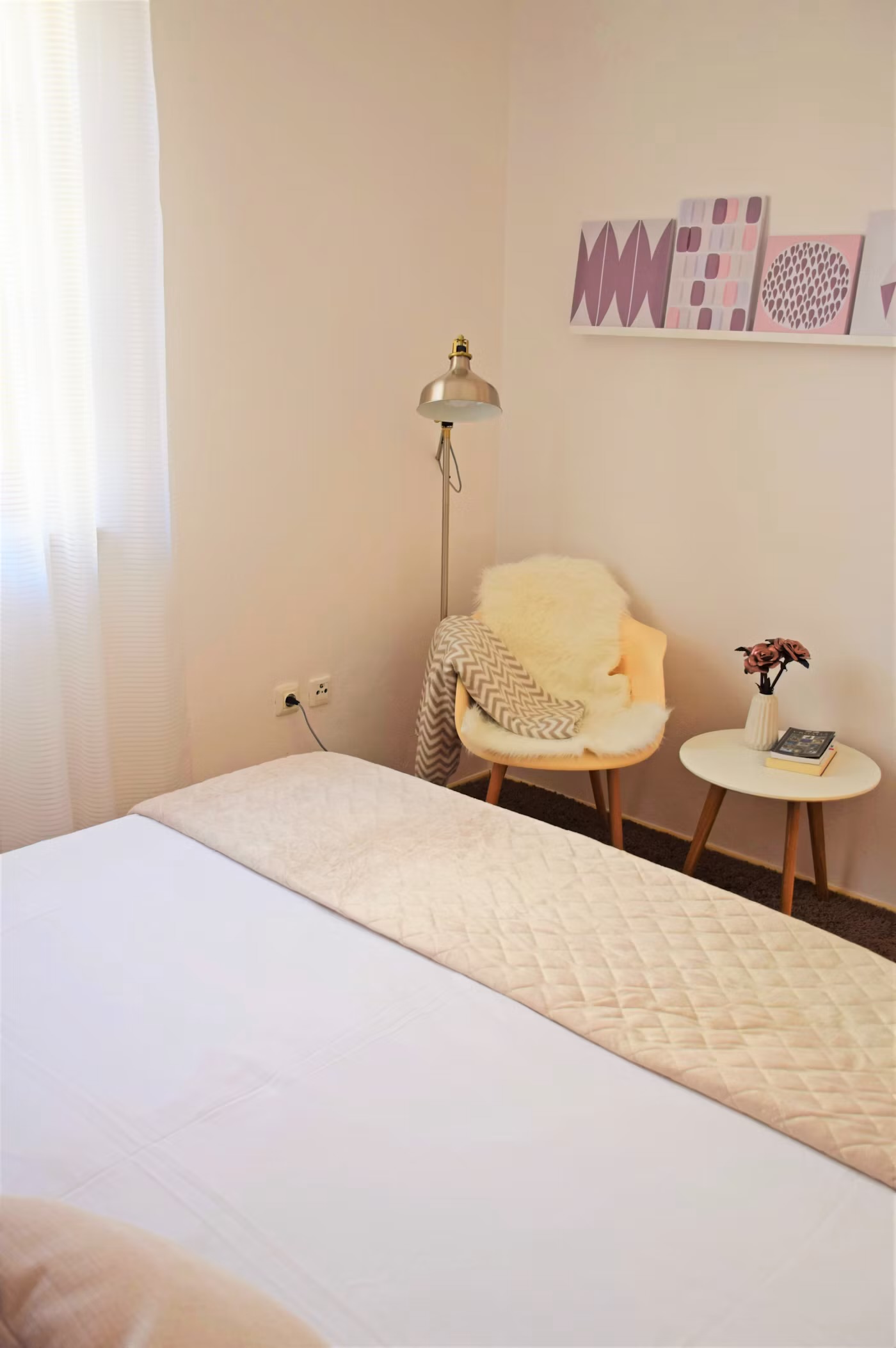
Closet organizing is where most bedroom resets begin and end. The closet sets the tone for the entire room because when it is chaotic, clothes end up on the chair, the floor, the bed. Organize by category, not by color. Daily items at eye level. Off season clothes in clear storage boxes on high shelves or under the bed. Switch to slim velvet hangers to free up 30 to 40 percent more rod space instantly.
Keep the nightstand to three items maximum: a lamp, your phone charger, and one personal item. Everything else goes in a drawer or on a shelf. The nightstand is the last thing you see before sleep and the first thing you see when you wake up. When it is calm, your mornings start calmer. For the full closet method, see my small bedroom closet ideas.
Bathroom
Small apartment bathrooms have almost no storage. The fix is vertical space: a slim over toilet storage shelf doubles your bathroom storage without using any floor space. An over the door organizer on the back of the bathroom door handles hair tools, small products, and extras. Inside the shower, a rust proof shower caddy keeps everything off the floor and the tub edge.
Keep only your current products on the counter or in the shower. Backups and extras go in a closet organizer or storage box elsewhere. Half the clutter in most bathrooms is duplicate products you bought because you could not find the one you already had. Use labels on clear containers inside the medicine cabinet so everything has a home. For product specific recommendations, see my 13 small bathroom organization products.
Storage Ideas That Prevent Clutter From Coming Back
The right storage organization solves a specific problem. The wrong storage adds bulk without function. Here is the difference.
Clear containers on high shelves let you see what is inside without pulling everything down. Use them with labels for kitchen pantry items, bathroom backups, seasonal decor, and off season clothes.
Shelf dividers in closets keep folded stacks from collapsing sideways. This is the most underrated closet organizing tool. Without them, neat folded piles slump into chaos within three days. With them, the closet stays organized between laundry cycles.
Over the door organizers turn the hidden back of every door into functional storage. Bathroom door for hair tools and small products. Bedroom closet door for scarves, belts, and accessories. Entry closet door for cleaning supplies or bags.
Under bed storage bins on wheels hold seasonal clothes, extra linens, or shoes. Out of sight, off the floor, and easy to access when you need a swap. For more on maximizing this space, see my under bed storage guide.
A slim shoe rack by the entryway replaces the pile of shoes that accumulates at the door. In a small apartment, three pairs of shoes on the floor makes the entrance feel chaotic. A vertical rack holds six or more pairs in the footprint of one. For more entryway ideas, see my small entryway guide.
The principle behind all of these storage ideas is the same: everything visible should be intentional. Everything functional should be hidden but accessible. When your storage does this, maintaining organization takes almost no effort.
Daily Habits That Keep Your Home Calm
The 30 day reset gets you to a clean baseline. The daily habits keep you there permanently. Without them, any organizing system decays. With them, your apartment maintains itself on autopilot.
Morning (2 minutes): make the bed, wipe the bathroom sink, put away anything left out from last night. Starting the day with these three things means you never walk into a messy apartment after work.
After meals (5 minutes): wash or load dishes immediately, wipe the counter, put food away. The kitchen is the room that falls apart fastest in a small space. This one habit prevents 80 percent of kitchen chaos.
Evening (5 minutes): quick surface sweep of every room. Return anything out of place to its zone. Straighten what shifted. Close cabinets and drawers. This nightly reset means every morning starts from a calm baseline instead of yesterday’s mess.
Twelve minutes total. That is the cost of a permanently organized home. Not hours. Not weekends. Twelve minutes spread across the day, every day, until it becomes as automatic as brushing your teeth. For a complete cleaning routine to pair with this, see my 15 minute cleaning routine.
What Changes When Your Home Is Calm
People think home organization is about having a neat apartment. It is not. It is about how you feel when you walk through the door.
When your surfaces are clear, you can think clearly. When everything has a place, you stop wasting time searching. When the closets are calm, getting dressed takes two minutes instead of ten. When the kitchen is organized, cooking feels enjoyable instead of stressful.
You stop buying duplicates of things you already own. You stop apologizing when someone comes over unexpectedly. You stop dreading weekends because they are no longer dedicated to catching up on the mess.
A small home is not a limitation. It is an invitation to keep only what feels calm.
EVERY PRODUCT IN THIS POST
Tap any item to shop it directly on Amazon
- Lazy susan — corner cabinet space saver
- Drawer organizers — no more junk drawers
- Under sink organizer — tiered sliding storage
- Matching storage jars — curated kitchen counter
- Storage ottoman — hides blankets, extra seating
- Floating shelf — replaces a side table
- Area rug — grounds the room, defines the zone
- Throw pillows — styled couch in one swap
- Slim velvet hangers — 30 to 40% more rod space
- Clear storage boxes — see what is inside, no guessing
- Under bed storage bins — hidden square footage
- Over toilet storage shelf — doubles bathroom storage
- Shower caddy — rust proof, off the floor
- Over the door organizer — free storage behind every door
- Shelf dividers — folded stacks stay upright
- Slim shoe rack — six pairs in the footprint of one
- Label maker — every box and bin marked
YOUR HOME DESERVES A RESET.
The Small Space Reset
9 room by room worksheets with the exact 5 step method.
A 30 day guided reset with calendar and habit tracker.
Storage principles, declutter trackers, daily and seasonal routines.
58 printable pages · Instant download · Works digitally or printed
Get The Small Space Reset · $12.99Join hundreds of women who gave their small home the calm reset it deserved
More organizing guides:
- 5 Step Closet Organizing System
- 15 Organization Hacks for Small Spaces
- The 15 Minute Cleaning Routine
- Small Pantry Organization
- 13 Bathroom Organization Products
- Shoe Storage Ideas for Small Spaces
This post contains affiliate links. If you make a purchase through these links, I may earn a small commission at no extra cost to you. I only recommend products I actually use and love.
Leave a Reply