When my first child was little, we lived in a small apartment. And it felt like toys were winning. The living room floor was covered. Baskets overflowed before bedtime. No matter how many times I cleaned up, the mess always came back by noon the next day.
What frustrated me most was that despite having so many toys out, most of them were ignored. My child bounced from one thing to the next without spending real time with any of them. The room felt overwhelming for both of us. And I kept thinking we need a bigger home.
We did not need a bigger home. We needed a better system. These are the 8 toy organization ideas that finally gave us our apartment back. Most of them cost less than a single new toy, and the difference they made in how our home looked and felt was honestly life changing.
WHAT IS IN THIS POST
- The toy rotation system that changed everything
- Where to store the toys that are not in rotation
- Cube storage that hides the chaos in plain sight
- Labels that let kids clean up on their own
- Book displays, mesh bags, and the living room reset
1. The Toy Rotation System That Changed Everything
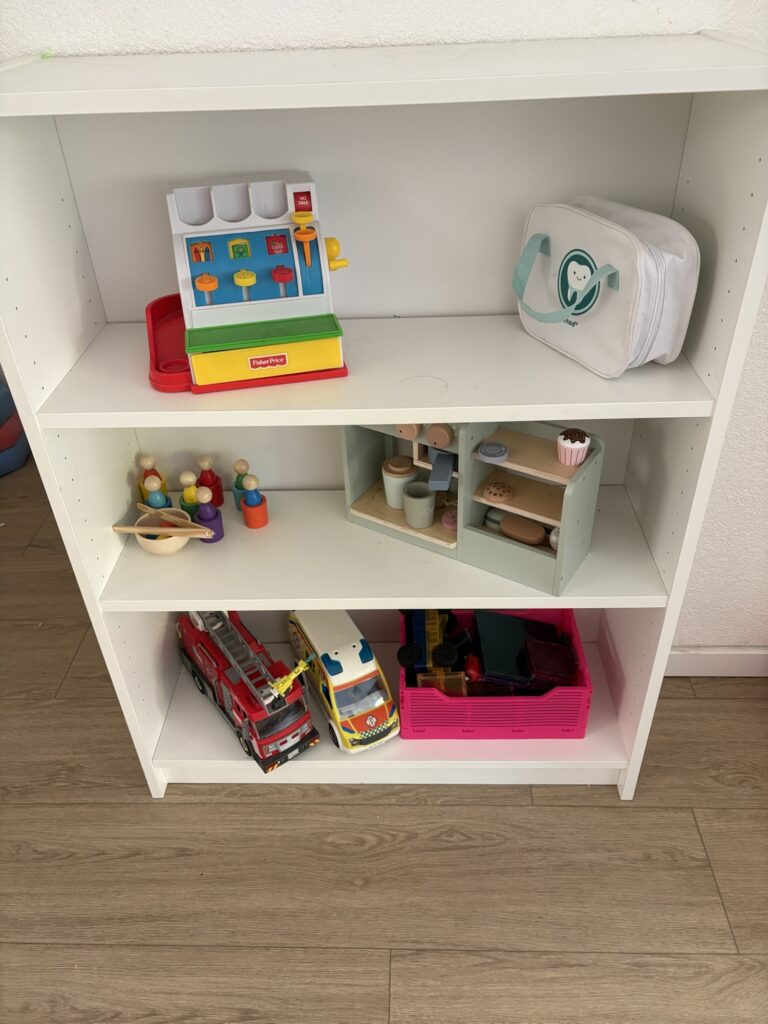
This was the single biggest breakthrough in our home. Instead of keeping every toy in the living room, I placed a simple bookshelf in our main living area and displayed only 6 to 8 toys at a time. Every one to two weeks, I swapped them out.
That is it. Toys my child had not touched in months suddenly felt exciting again, almost like bringing home new toys without spending a single dollar. Cleanup went from a 20 minute battle to a 3 minute routine because there were only a few things to put back.
But the real surprise was how much more my child actually played. When fewer toys were available, there was less overwhelm and more focus. Instead of bouncing between 30 options, my child spent real time exploring the 6 that were out. The play was deeper, longer, and calmer. And so was the room.
 Shop Rotation Bookshelf
2. Where to Store the Toys That Are Not in Rotation
The biggest challenge with toy rotation in a small apartment is figuring out where to keep the other toys. We did not have a playroom, a basement, or a spare closet. What we did have was dead space under our bed.
Large under bed storage bins held all the toys outside the current rotation. I sorted them loosely by category so swapping was easy: one bin for building toys, one for imaginative play, one for puzzles and smaller items. I added bed risers to lift the bed just enough for the larger bins to fit underneath. For more under bed ideas, see my under bed storage guide.
Every swap day I pulled out one or two bins, picked a few toys, and slid the bins back. The whole rotation took five minutes. The toys lived completely out of sight, the bedroom stayed calm, and we used space that would have otherwise collected dust.
 Shop Under Bed Storage Bins
Shop Bed Risers
Shop Under Bed Storage Bins
Shop Bed Risers
3. Cube Storage That Hides the Chaos in Plain Sight
A cube storage organizer is the piece of furniture I wish I had bought from day one. It looks like a clean, styled bookshelf from the outside, but each cube holds a fabric bin full of toys, art supplies, or books.
The beauty of cubes is that guests see a tidy shelf with matching bins. You see 6 categories of toys, each in its own container, each easy to pull out and put back. Your child sees a simple choice: which bin do I want to play with right now? Not 40 toys scattered across the floor. Just a few clear options.
I kept ours in the living room because that is where my child played most. It doubled as a console table on top, so it served the room even when it was not being used for toys. In a small apartment, furniture that hides kid chaos while looking like adult decor is worth its weight in gold. For more small apartment living room ideas, see my living room guide.
Shop Cube Storage Organizer Shop Fabric Toy Bins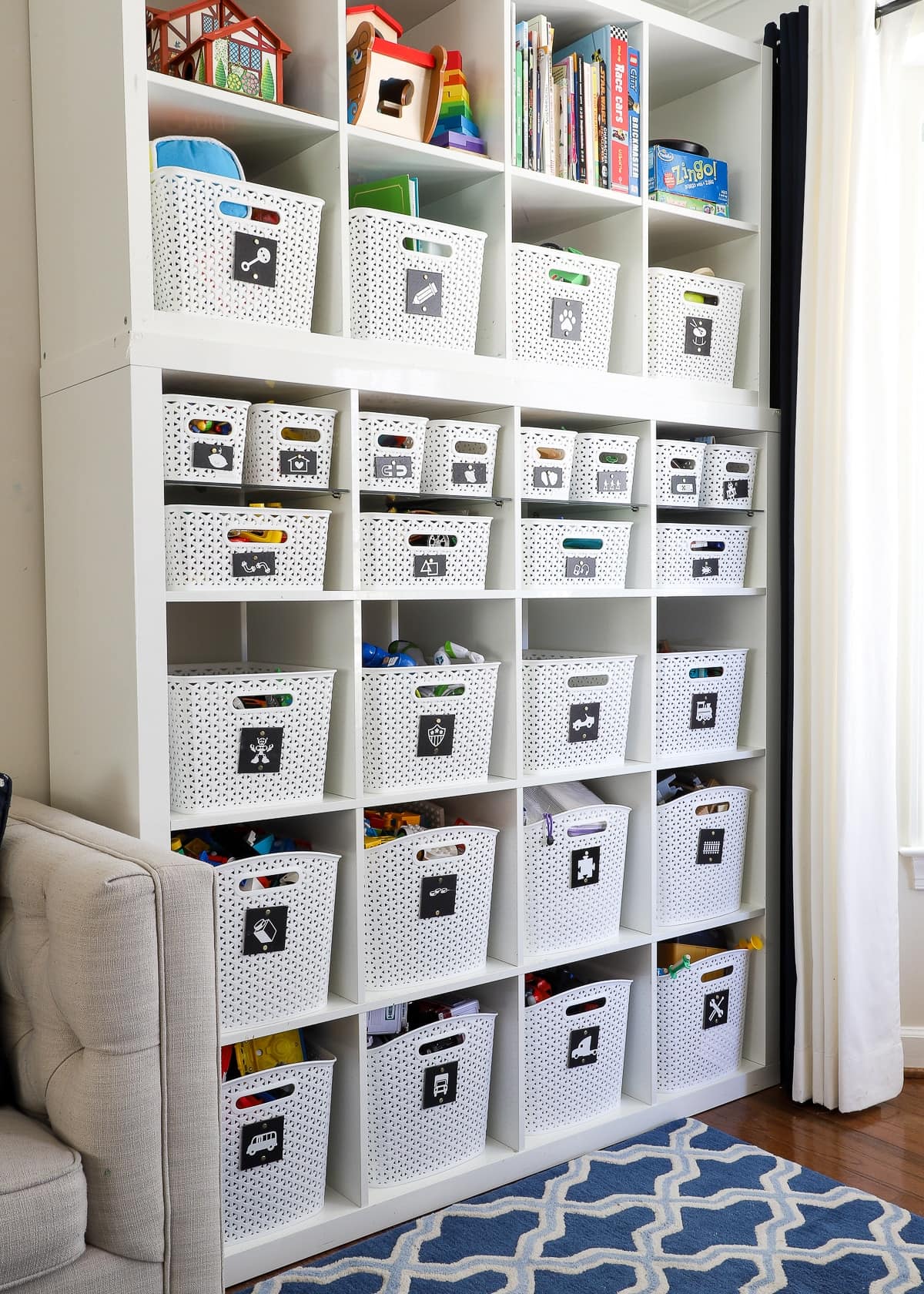
Image credit: The Homes I Have Made
4. Labels That Let Kids Clean Up on Their Own
The reason cleanup always fell on me was that my child genuinely did not know where things went. Every bin looked the same. Every shelf was a mystery. So toys ended up wherever they landed, which was usually the floor.
Picture labels changed that overnight. I printed simple images of each toy category (blocks, cars, animals, art supplies) and stuck them on the front of each bin. Suddenly my child could see exactly where everything belonged. Cleanup became a matching game instead of a chore. Cars go in the car bin. Animals go in the animal bin. Done.
Toy bin labels with pictures are the cheapest product on this list and the one that saved me the most daily frustration. When kids can clean up independently, the system maintains itself. You stop being the only person who knows where things go.
 Shop Toy Bin Labels
5. Books Were Everywhere Until I Gave Them a Display
Kids books ended up on every surface in our apartment. The couch, the nightstand, the floor, the kitchen counter. Somehow a book pile appeared in every room, every day, no matter how many times I collected them.
A front facing book display solved this completely. Unlike a regular bookshelf where books are spine out (and invisible to a child), a sling or front facing shelf shows the covers. My child could see the books, choose one, and put it back without pulling out every book on the shelf to find the one they wanted.
The book pile disappeared from every other surface because the books finally had a dedicated, visible home. And my child read more, because seeing the cover of a book is an invitation in a way that seeing a spine is not.
 Shop Book Display
6. Small Parts Were the Worst Until Mesh Bags Fixed Them
Puzzle pieces. Lego. Play food. Marble run parts. Small toy pieces were the thing that made our apartment feel truly chaotic. They ended up under the couch, between the cushions, in my shoes, everywhere except where they belonged.
Mesh bags with labels solved the small parts problem permanently. Each set gets its own bag: one puzzle per bag, one Lego set per bag, one collection of small figures per bag. The mesh means you can see what is inside without opening it, and nothing falls out because the drawstring seals it shut.
These also made toy rotation incredibly easy. Instead of sorting loose pieces into bins, I just grabbed a few mesh bags from storage and dropped them in the living room basket. Swap day went from ten minutes to two.
 Shop Mesh Bags
7. A Toy Free Living Room Reset Every Night
This was the habit that made all the storage products actually work. Every night after the kids went to bed, I did a two minute living room reset. Every toy back in its bin. Every book back on the display. Every cushion back on the couch. Every surface cleared.
It sounds small but the impact was enormous. Every morning I woke up to a calm, toy free living room. The day started from a clean baseline instead of yesterday’s mess. My brain could breathe before the chaos started again. And it always started again, because kids. But it started from zero, not from a pile.
The nightly reset works because the storage systems make it fast. When every toy has a labeled home, putting 8 things away takes two minutes. Without the systems, putting 40 scattered toys away takes 20 minutes and you stop doing it after three days. For more on building daily cleaning routines, see my small space cleaning routine.
8. Why We Still Use This System Today
Even though we no longer live in that apartment, I still use toy rotation today. Our current home is still relatively small, and honestly, the system works too well to stop. Most of our toys are stored in labeled bins in the attic, and every few weeks I rotate toys in and out just like I did years ago.
The biggest surprise was how much calmer the kids became. Fewer choices meant less overwhelm, more focus, and deeper play. And for me, a living room that looked like a living room instead of a toy store was worth every minute I spent setting up this system.
Toy organization for small spaces is not about buying more storage or having a bigger playroom. It is about creating a system where fewer toys are out, everything has a home, and cleanup is so simple that even a toddler can do it.
We did not need a bigger home. We just needed fewer toys out at once.
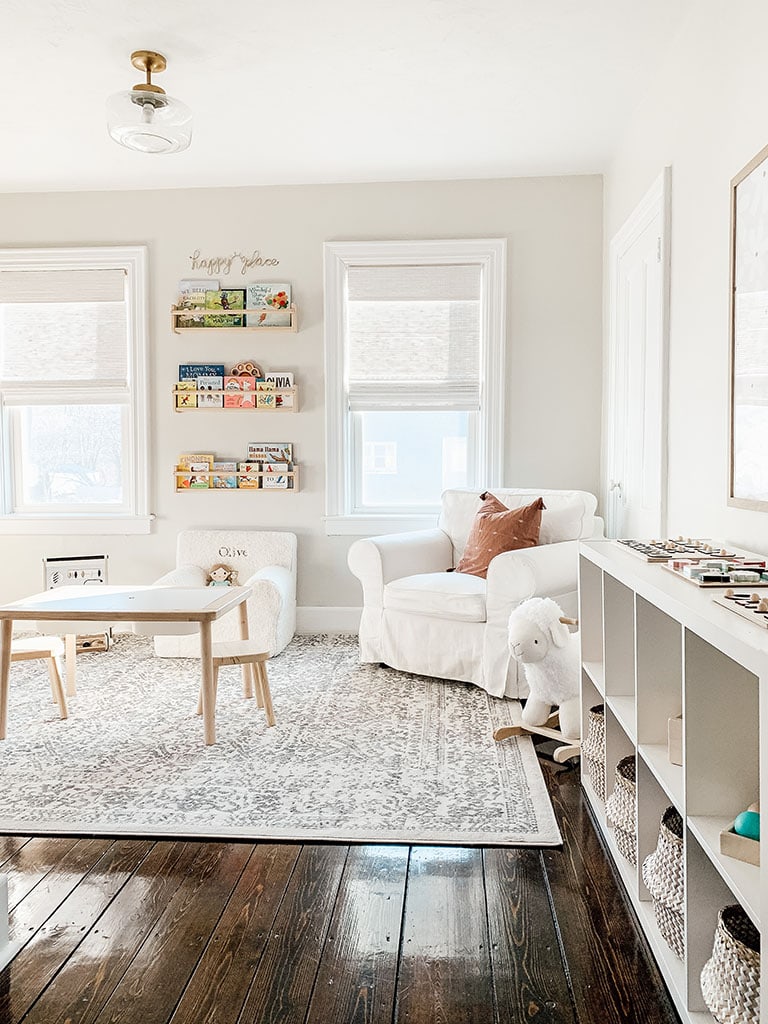
Image credit: Micheala Diane Designs
EVERY PRODUCT IN THIS POST
Tap any item to shop it directly on Amazon
- Rotation bookshelf — display 6 to 8 toys, swap weekly
- Under bed storage bins — hide rotation stock out of sight · Under $32
- Bed risers — make room for larger bins underneath
- Cube storage organizer — hides kid chaos, looks like adult furniture
- Fabric toy bins — one category per bin, easy to pull and put back
- Toy bin labels with pictures — kids clean up independently · $11.99
- Front facing book display — covers visible, kids read more
- Mesh bags with labels — small parts contained, rotation made easy · $15
More small space guides:
- Under Bed Storage Guide
- Small Apartment Living Room Ideas
- The Small Space Cleaning Routine
- 15 Organization Hacks for Small Spaces
- How to Reset Your Entire Apartment in 30 Days
THE TOYS ARE ORGANIZED. NOW DO THE REST.
The Small Space Reset
Room by room worksheets for every area of your home.
A 30 day guided reset with daily routines and storage principles.
Designed for small apartments with kids, toys, and real life mess.
58 printable pages · Instant download · Works digitally or printed
Get The Small Space Reset · $12.99Join hundreds of women who gave their small home the calm reset it deserved
This post contains affiliate links. If you make a purchase through these links, I may earn a small commission at no extra cost to you. I only recommend products I actually use and love.
Disclaimer: As an Amazon Associate, I earn from qualifying purchases.
Leave a Reply